
How Does TRT Work? Testosterone Replacement Therapy Explained

If you’ve been experiencing low energy, reduced sex drive, changes in muscle mass, or other symptoms associated with low testosterone, you may have come across testosterone replacement therapy (TRT) while researching your options.
But how does TRT work, and what actually happens when you start testosterone replacement therapy?
TRT is a medical treatment designed to supplement testosterone when a man has testosterone deficiency and treatment is clinically appropriate. Rather than simply trying to make testosterone levels as high as possible, treatment generally aims to restore testosterone to an appropriate range while improving symptoms and monitoring your overall health.
Below, we explain how testosterone replacement therapy works, the different forms of TRT, how long it may take to notice changes, and what men should know before considering treatment.
What Is Testosterone Replacement Therapy (TRT)?
Testosterone replacement therapy, commonly called TRT, is a prescription treatment that provides testosterone from an external source.
Testosterone is an androgen hormone produced primarily by the testes. It plays a role in many functions throughout the male body, including:
Sex drive and sexual function
Muscle mass and strength
Bone health
Red blood cell production
Sperm production and reproductive health
Body composition
Mood and well-being
When the body doesn't produce enough testosterone, some men can develop symptoms of testosterone deficiency, sometimes referred to as low testosterone or low T.
TRT provides testosterone to supplement what the body is producing.
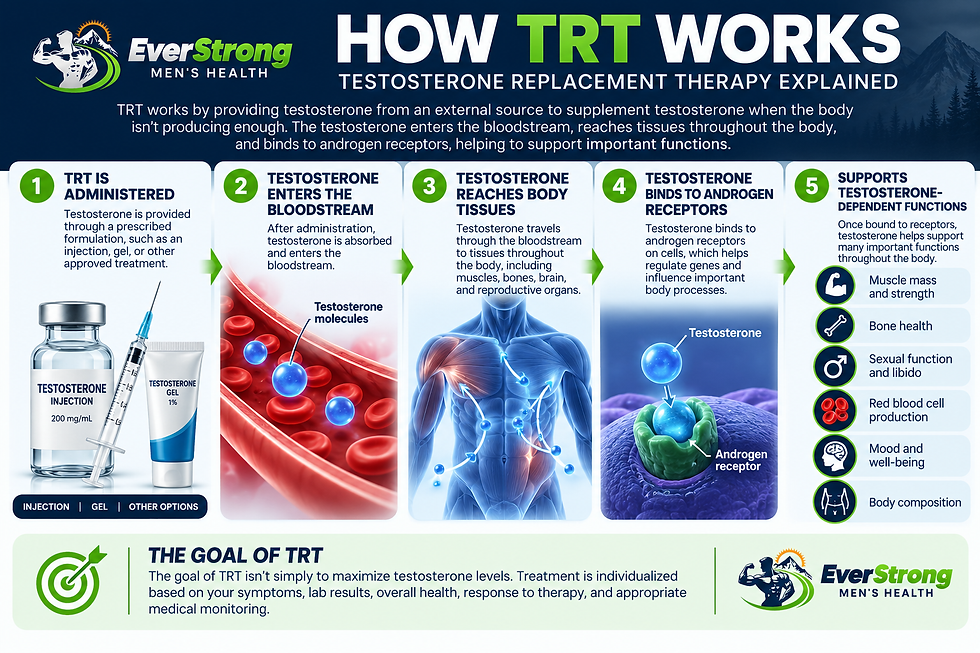
TRT works by introducing testosterone into the body through a prescribed medication, such as an injection or topical preparation.
Once administered, testosterone enters the bloodstream and acts on androgen receptors in tissues throughout the body.
A simple way to understand the process is:
TRT medication → Testosterone enters the bloodstream → Testosterone reaches tissues throughout the body → Androgen receptors respond to testosterone → Testosterone-dependent processes are supported
The goal isn't simply to increase a number on a laboratory report. Treatment should be individualized based on a man's symptoms, testosterone measurements, medical history, treatment response, and appropriate monitoring.
What Happens to Your Body When You Start TRT?
The effects of TRT vary from person to person.
When testosterone levels are low and testosterone replacement therapy is medically appropriate, treatment may improve certain symptoms associated with testosterone deficiency.
Depending on the individual, changes may involve areas such as sexual function, body composition, muscle mass, bone health, or anemia.
However, TRT isn't an instant transformation.
Some changes may occur sooner than others, while changes involving body composition or bone health can take considerably longer. Not every symptom will necessarily improve with testosterone treatment, particularly when another health condition is contributing to the problem.
That's why follow-up care is important.
TRT is generally considered for men who have symptoms or signs consistent with testosterone deficiency together with consistently low testosterone levels.
Having fatigue, gaining weight, or getting older doesn't automatically mean a man needs TRT.
Likewise, one low testosterone result isn't necessarily enough to establish testosterone deficiency.
Evaluation commonly involves:
Discussing symptoms and medical history.
Measuring testosterone with appropriately timed blood testing.
Confirming a low result when appropriate.
Evaluating potential causes of low testosterone.
Considering health conditions, medications, fertility goals, and potential treatment risks.
Discussing whether TRT is an appropriate option.
The American Urological Association uses a total testosterone level below 300 ng/dL as a reasonable cutoff supporting a diagnosis of low testosterone, while emphasizing the importance of symptoms and repeat measurements.

How Is Testosterone Tested Before TRT?
A blood test is commonly used to measure total testosterone.
Because testosterone levels can fluctuate throughout the day, early-morning testing is commonly recommended when evaluating possible testosterone deficiency. A low measurement is typically confirmed with another test rather than making a diagnosis from a single result.
Depending on the circumstances, a healthcare provider may also consider additional testing.
This can help determine whether low testosterone is present and whether there may be an underlying reason for it.
What Are the Different Types of TRT?

Testosterone replacement therapy can be delivered in several forms. The appropriate option depends on factors such as medical needs, convenience, treatment response, cost, and patient preference.
Testosterone Injections
Testosterone injections are one commonly used form of TRT.
Testosterone is administered according to a prescribed dosing schedule. Depending on the medication and treatment plan, injections may be given intramuscularly or subcutaneously.
Your healthcare provider determines the appropriate medication, dose, injection technique, and schedule.
Testosterone Gels
Testosterone gel is applied to the skin, allowing testosterone to be absorbed into the bloodstream.
Gels typically require regular application and precautions to help prevent the medication from being transferred through skin contact to another person.
Testosterone Patches
Testosterone patches deliver testosterone through the skin over time.
Skin irritation can occur in some users, and availability or prescribing patterns may vary.
Other Testosterone Treatments
Other testosterone formulations may also be available depending on the patient and clinical circumstances.
There isn't one TRT method that is automatically best for every man. Treatment should be selected with a healthcare provider based on individual needs.
How Long Does TRT Take to Work?
There isn't one universal timeline.
Some effects of testosterone treatment may become noticeable earlier, while other physiological changes can take months. Your starting testosterone level, symptoms, overall health, treatment method, and individual response can all affect the timeline.
TRT should therefore be viewed as an ongoing medically monitored treatment, not a quick fix.
Follow-up appointments and laboratory testing allow your provider to evaluate whether treatment is working appropriately.
Does TRT Build Muscle?
Testosterone plays an important role in maintaining muscle mass and strength.
For men with testosterone deficiency, testosterone therapy can affect lean body mass and body composition. However, TRT isn't a substitute for strength training, adequate nutrition, sleep, and other healthy behaviors.
TRT also shouldn't be confused with nonmedical anabolic steroid use or using testosterone solely for bodybuilding or athletic performance.
The purpose of medically prescribed TRT is to treat appropriately diagnosed testosterone deficiency.
Does TRT Help With Energy?
Fatigue and low energy are commonly associated with low testosterone, but they are also extremely nonspecific symptoms.
Poor sleep, sleep apnea, stress, depression, thyroid problems, anemia, medication effects, chronic disease, and numerous other conditions can contribute to fatigue.
For that reason, experiencing low energy doesn't necessarily mean testosterone is the cause.
A medical evaluation can help determine whether testosterone deficiency or another issue may be contributing to your symptoms.
Does TRT Improve Sex Drive?
Reduced libido is one of the symptoms that can be associated with testosterone deficiency.
For appropriately selected men with low testosterone, testosterone therapy may improve sexual symptoms. However, sexual health is complex.
Erectile dysfunction, for example, can also be related to cardiovascular disease, diabetes, medications, psychological factors, neurological conditions, and other causes.
Testing testosterone is therefore one part of evaluating sexual-health concerns rather than an automatic explanation for every symptom.
What Are the Potential Risks and Side Effects of TRT?
TRT is prescription medical therapy and requires appropriate monitoring.
Potential effects and considerations can include:
Increased red blood cell concentration or hematocrit
Acne or oily skin
Reduced sperm production
Changes in testicular function
Fluid retention in some patients
Possible worsening of certain conditions
The need to monitor prostate-related factors when appropriate
The risks and benefits aren't identical for every patient.
Before beginning treatment, your healthcare provider should review your medical history and discuss potential benefits, risks, alternatives, and monitoring requirements.
Does TRT Affect Fertility?
Yes, and this is particularly important for younger men to understand.
Men who are currently trying to conceive—or who want to preserve their future fertility—should discuss those goals with their healthcare provider before starting testosterone therapy.
Alternative approaches may be considered in certain circumstances.
Do You Have to Stay on TRT Forever?
This is more complicated than a simple yes or no.
While taking external testosterone, the body's natural testosterone production can be suppressed. What happens after stopping treatment can depend on factors such as why testosterone was low originally, treatment duration, age, underlying health, and individual physiology.
TRT should therefore not be started casually with the assumption that you can simply try it for a few weeks and return immediately to your previous hormonal state.
Before beginning treatment, ask your provider about the potential long-term implications and what discontinuing therapy could involve.
How Is TRT Monitored?
Proper testosterone replacement therapy involves more than prescribing testosterone.
Follow-up care may include evaluating:
Testosterone levels
Symptoms and treatment response
Hemoglobin and hematocrit
Potential side effects
Prostate health when clinically appropriate
Cardiovascular risk factors and overall health
Changes in medications or health conditions
The specific monitoring schedule depends on the individual and the treatment being used.
If testosterone levels change but symptoms don't improve, that information is also important. Your provider may need to consider whether something other than low testosterone is contributing to your symptoms.
Is TRT Safe?
For appropriately selected patients, testosterone therapy can be considered after an individualized discussion of its potential benefits and risks.
But TRT isn't appropriate for everyone.
Certain medical conditions or circumstances may require additional evaluation, treatment modification, or avoiding testosterone therapy altogether.
That's one reason buying testosterone from an unregulated source or using another person's prescription can be dangerous. Testosterone is a prescription medication that should be used under medical supervision.
TRT vs. “Testosterone Boosters”: What's the Difference?
TRT and over-the-counter products marketed as testosterone boosters aren't the same thing.
TRT uses prescription testosterone medication and is prescribed by a healthcare professional for an appropriate medical indication.
Supplements marketed as testosterone boosters may contain herbs, vitamins, minerals, or other ingredients and don't function as prescription testosterone replacement therapy.
If you think you have low testosterone, testing is more useful than trying to determine your hormone status based on symptoms or supplement marketing.
Can Lifestyle Changes Increase Testosterone?
Lifestyle and overall health can influence testosterone levels in some men.
Depending on the individual, addressing factors such as excess body weight, inadequate sleep, untreated sleep disorders, nutrition, physical activity, or other health conditions may be an important part of managing low testosterone.
That's another reason a proper evaluation matters.
The best treatment isn't necessarily testosterone for every man with a low result. Sometimes identifying and addressing an underlying contributor is an important part of the plan.
What does TRT actually do?
TRT provides testosterone from an external source. The testosterone enters the bloodstream and acts on androgen receptors throughout the body, supplementing testosterone when the body isn't producing enough and treatment is medically appropriate.
How quickly does TRT start working?
The timeline varies. Some treatment effects may occur sooner than others, while changes involving body composition or bone health can take months. Your provider can monitor symptoms and laboratory results over time.
What happens after your first testosterone injection?
After an injection, the medication is absorbed and testosterone enters the bloodstream. Testosterone levels change according to the formulation, dose, injection schedule, and individual response. One injection shouldn't be viewed as an instant solution to symptoms.
Does TRT give you energy?
Some men with confirmed testosterone deficiency may experience changes in symptoms during treatment, but fatigue has many possible causes. Low energy alone doesn't establish that someone has low testosterone or will benefit from TRT.
Does TRT increase testosterone immediately?
Testosterone levels can rise after treatment is administered, but the pharmacologic pattern depends on the specific formulation. Changes in blood testosterone levels and noticeable changes in symptoms aren't necessarily the same thing.
Is TRT the same as steroids?
Prescription testosterone is an androgen and anabolic steroid hormone, but medically supervised TRT is different from nonmedical anabolic-steroid use for bodybuilding or performance enhancement. TRT is intended to treat appropriately diagnosed testosterone deficiency using a medically supervised treatment plan.
Can you stop TRT once you start?
TRT can be discontinued under medical supervision, but external testosterone can suppress natural testosterone production. What happens after discontinuation varies among individuals, so stopping treatment should be discussed with your healthcare provider.
How Do You Know If TRT Is Right for You?
You can't determine whether you need testosterone replacement therapy based on age, fatigue, gym performance, or an online symptom checklist alone.
The first step is determining whether your symptoms are actually associated with testosterone deficiency.
That generally means combining your symptoms, medical history, physical evaluation when appropriate, and properly obtained laboratory testing.
If testosterone is consistently low, your healthcare provider can investigate potential causes and discuss whether TRT or another approach makes sense for you.
Learn Whether TRT May Be Right for You at EverStrong Men's Health
If you're experiencing symptoms associated with low testosterone, you don't have to rely on guesswork.
At EverStrong Men's Health, testosterone evaluation starts with understanding your symptoms, health history, laboratory results, and personal goals. If testosterone deficiency is confirmed, your provider can discuss whether testosterone replacement therapy is appropriate and explain your treatment and monitoring options.
This article is provided for educational purposes only and is not a substitute for individualized medical advice, diagnosis, or treatment from a qualified healthcare professional.
This Article was reviewed by Timothy Bui APRN, FNP-C


Comments