
Feeling tired even after a full night's sleep? Struggling with low libido, decreased motivation, or difficulty maintaining muscle? For many men in Baytown, TX, these symptoms raise an important question: Could low testosterone be affecting my health?
When researching low testosterone treatment, two options frequently come up: testosterone replacement therapy (TRT) and enclomiphene. Although both may increase testosterone levels, they work differently, especially when it comes to natural testosterone production and fertility.
At EverStrong Men's Health in Baytown, Texas, we believe understanding your treatment options is an important first step toward making informed decisions about your health.
What Is Testosterone Replacement Therapy (TRT)?
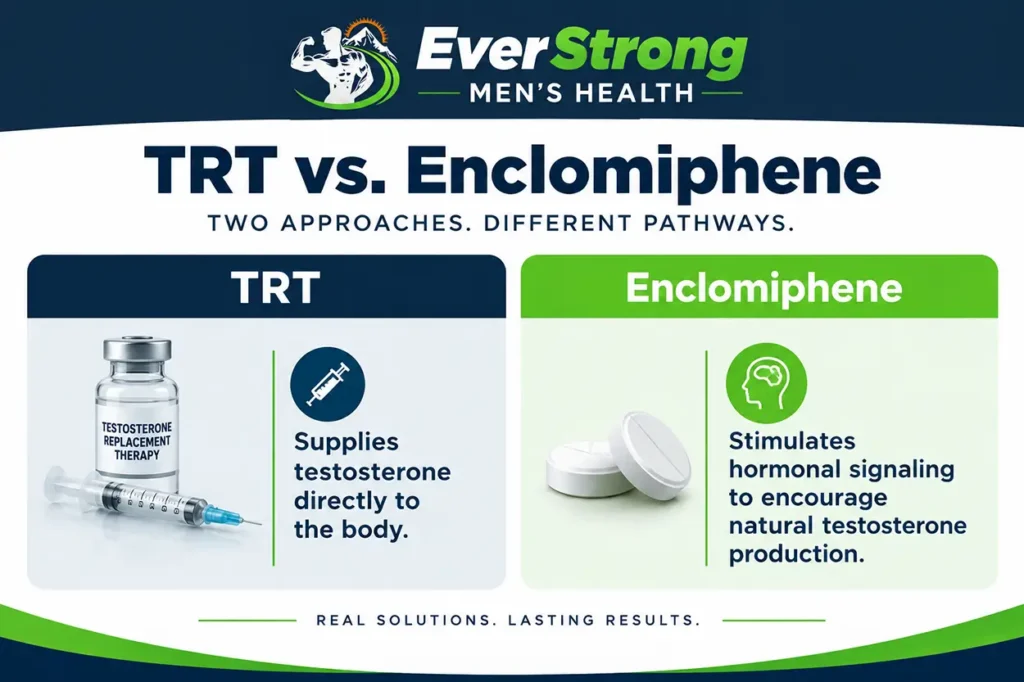
Testosterone replacement therapy is a medically established treatment for men with clinically diagnosed testosterone deficiency. TRT works by supplying testosterone directly to the body through injections, topical gels, creams, or certain oral medications.
For men experiencing symptoms associated with low testosterone, TRT may help improve sexual function, energy, mood, and body composition when testosterone deficiency is the underlying cause. Results vary, and not every symptom is necessarily caused by low testosterone.
One important consideration is that TRT can suppress the body's natural testosterone production and reduce sperm production. This makes fertility planning particularly important for younger men or anyone considering having children.
Men searching for testosterone replacement therapy in Baytown, TX, should seek a qualified healthcare provider who can evaluate symptoms, confirm low testosterone through appropriate testing, and monitor treatment.
What Is Enclomiphene, and How Does It Work?
Enclomiphene is a selective estrogen receptor modulator (SERM) that works differently from traditional TRT. Rather than supplying testosterone directly, enclomiphene acts on the body's hormonal signaling system.
It can stimulate the release of luteinizing hormone (LH) and follicle-stimulating hormone (FSH), which help signal the testes to produce testosterone and support sperm production.
This mechanism has generated interest among men researching enclomiphene for low testosterone, particularly those concerned about preserving fertility.
However, enclomiphene is not FDA-approved for treating male testosterone deficiency. Its use is considered investigational or off-label, depending on the circumstances and product. Evidence regarding long-term safety and meaningful symptom improvement remains limited.
Enclomiphene should not be viewed as a risk-free or universally effective alternative to testosterone therapy.
TRT vs. Enclomiphene: What's the Biggest Difference?
The primary difference between TRT and enclomiphene is how each treatment increases testosterone.
TRT replaces testosterone directly, while enclomiphene attempts to stimulate the body's existing testosterone production.
TRT may be appropriate for men with confirmed testosterone deficiency, including certain cases where the testes cannot produce adequate testosterone independently.
Enclomiphene may increase testosterone in some men whose hormonal signaling system remains responsive, particularly those with certain forms of secondary hypogonadism.
Another major difference involves fertility. TRT commonly suppresses sperm production, sometimes substantially. Enclomiphene may preserve sperm production in some men, but fertility benefits and long-term outcomes are not fully established.
Neither treatment is automatically superior. Medical history, laboratory findings, symptoms, and reproductive goals should guide the discussion.
Which Option Is Better for Men Who Want to Maintain Fertility?
For men planning to have children, fertility is one of the most important considerations when exploring low testosterone treatment.
Traditional TRT can interfere with sperm production because external testosterone suppresses hormonal signals from the brain that normally stimulate the testes.
Enclomiphene works through those signals rather than replacing testosterone directly. Some clinical studies have demonstrated increases in testosterone while maintaining sperm concentrations.
However, preserving sperm counts does not guarantee fertility, and enclomiphene has not been established as an FDA-approved fertility treatment.
Men concerned about future fertility should discuss reproductive goals before beginning hormone therapy. Depending on their diagnosis, other medically supervised options may be more appropriate.
How Do You Know If You Have Low Testosterone?
Symptoms such as fatigue, reduced sex drive, erectile difficulties, decreased muscle mass, and changes in mood can be associated with testosterone deficiency.
However, these symptoms may also result from poor sleep, stress, obesity, medication effects, thyroid disorders, or other medical conditions.
Diagnosing low testosterone generally requires compatible symptoms and consistently low testosterone levels confirmed through repeat morning blood tests.
Additional testing, including LH and FSH levels, can help determine whether the problem originates in the testes or the hormonal signaling system.
For men searching for low T treatment near Baytown or Mont Belvieu, a thorough medical evaluation is more valuable than choosing a medication based solely on online recommendations.
Explore Your Low Testosterone Treatment Options in Baytown, TX
Choosing between TRT and enclomiphene involves more than increasing a number on a laboratory report. Your symptoms, fertility goals, medical history, and long-term health all matter.
At EverStrong Men's Health, we encourage men throughout Baytown, Mont Belvieu, and East Houston to take a proactive, informed approach to their hormonal health.
Whether you're researching testosterone injections, alternative low testosterone treatments, or ways to better understand your hormone levels, professional guidance can help you identify appropriate next steps.
Ready to take the next step toward understanding your testosterone health?
Visit EverStrongnow.com to connect with EverStrong Men's Health in Baytown, TX, and schedule a consultation. Learn more about your testosterone levels, discuss your treatment options, and discover an individualized approach to men's health.