
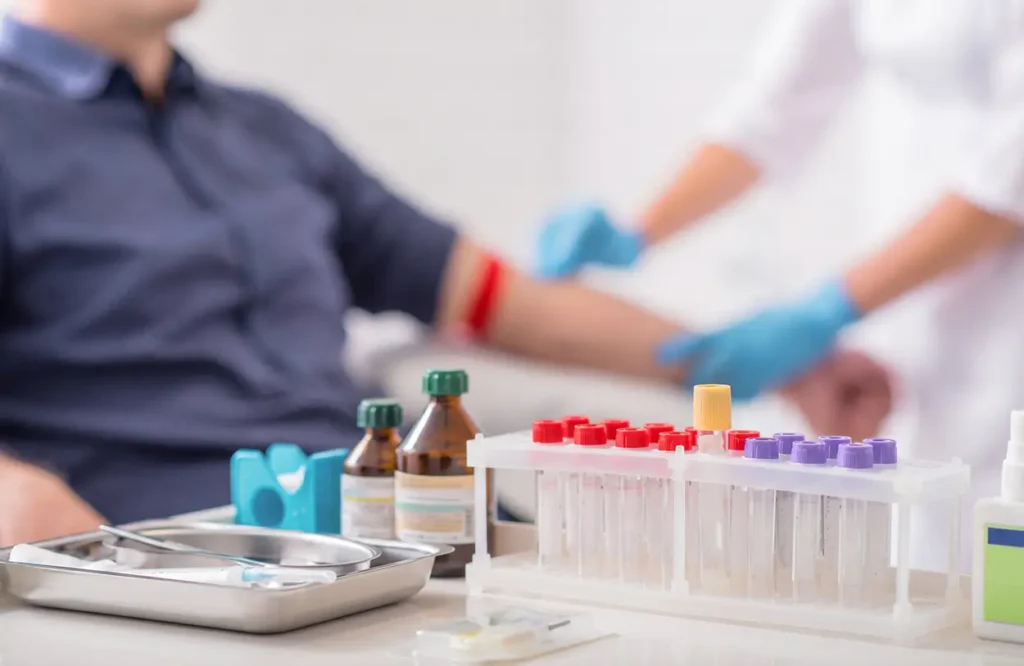
Testosterone replacement therapy (TRT) can help men with clinically diagnosed testosterone deficiency improve symptoms such as low libido, fatigue, and reduced muscle strength. However, before starting treatment, it's essential to understand what blood tests are needed before starting TRT.
Comprehensive blood work helps healthcare providers confirm low testosterone, identify underlying causes, assess potential risks, and establish baseline values for monitoring treatment.
Here's what you should know about the most important blood tests before testosterone replacement therapy.
1. Total Testosterone Test
A total testosterone blood test is the starting point for evaluating testosterone deficiency.
This test measures the total amount of testosterone circulating in your bloodstream, including testosterone bound to proteins.
Many clinicians use a total testosterone level below 300 ng/dL as a diagnostic reference point, although laboratory ranges and professional guidelines vary.
Important: Testosterone should generally be measured in the early morning, ideally between 7 a.m. and 10 a.m., and low results should be confirmed with a second test on a separate morning.
A low result alone does not automatically mean TRT is necessary. Symptoms and medical history matter.
2. Free Testosterone and SHBG
Total testosterone doesn't always tell the complete story.
Free testosterone represents the small portion of testosterone not bound to proteins, while sex hormone-binding globulin (SHBG) influences how much testosterone is available.
Your provider may recommend:
- Free testosterone, preferably measured or calculated using reliable methods
- SHBG (sex hormone-binding globulin)
- Albumin, when needed to calculate free testosterone
These tests are particularly helpful when total testosterone results are borderline or conditions affecting SHBG are present.
3. Complete Blood Count (CBC)
A complete blood count (CBC) is one of the most important safety tests before starting TRT.
It evaluates several blood components, including:
- Hemoglobin
- Hematocrit
- Red blood cell count
Testosterone therapy can increase red blood cell production, potentially causing elevated hematocrit.
A baseline CBC helps determine whether TRT can be started safely and provides a comparison for future monitoring.
4. PSA Test and Prostate Evaluation
For appropriate patients, a prostate-specific antigen (PSA) blood test may be recommended before testosterone therapy.
PSA testing helps identify prostate-related concerns that may require additional evaluation.
Testing decisions depend on age, individual risk factors, symptoms, and shared decision-making with a healthcare provider.
Not every man needs PSA screening, but prostate health should be considered before beginning TRT.
5. LH and FSH Hormone Tests
Luteinizing hormone (LH) and follicle-stimulating hormone (FSH) help evaluate how the brain communicates with the testicles.
These hormones can help distinguish between:
- Primary hypogonadism: The testicles are not producing adequate testosterone.
- Secondary hypogonadism: The hypothalamus or pituitary gland is not providing sufficient hormonal stimulation.
LH is particularly important in the initial evaluation, while FSH can provide additional information, especially when fertility is a concern.
6. Estradiol (E2) Test
Estradiol is a form of estrogen naturally present in men.
Although estrogen is essential for male health, abnormal estradiol levels may contribute to certain symptoms.
An estradiol blood test may be useful when patients have breast tenderness, gynecomastia, or other clinical indications.
Routine estradiol testing is not necessary for every patient before TRT.
7. Additional Blood Tests Before TRT
Depending on your health history, symptoms, and risk factors, your healthcare provider may recommend additional laboratory testing.
These may include:
- Prolactin: Helps investigate certain pituitary-related causes of low testosterone.
- Thyroid function (TSH): Evaluates thyroid conditions that can mimic testosterone deficiency symptoms.
- Lipid panel: Measures cholesterol and triglycerides to assess cardiovascular risk.
- Hemoglobin A1c or fasting glucose: Screens for diabetes and metabolic concerns.
- Comprehensive metabolic panel (CMP): Assesses kidney function, liver markers, and electrolytes when clinically appropriate.
These tests support a more complete assessment but are not universally required for every TRT candidate.
How Often Should Blood Work Be Done on TRT?
Blood testing doesn't stop after treatment begins.
Your healthcare provider will typically monitor testosterone levels, hematocrit, symptoms, and treatment response.
Follow-up laboratory testing is commonly performed approximately 3–6 months after starting TRT, with subsequent monitoring based on results, treatment formulation, and clinical guidelines.
PSA monitoring may also be appropriate for selected patients.
Final Thoughts: Get the Right Blood Tests Before Starting TRT
Understanding what blood tests are needed before starting TRT is essential for making informed decisions about testosterone replacement therapy.
Total testosterone, CBC, LH, and selected additional tests help determine whether TRT is appropriate and how to monitor it safely.
A thorough medical evaluation also considers fertility plans, sleep apnea, cardiovascular health, prostate-related concerns, and other potential contraindications.
Ready to explore TRT? Schedule an initial consultation with EverStrong Men’s Health in Baytown to discuss your symptoms, laboratory results, and personalized treatment options.
Medical Disclaimer: This article is for educational purposes only and does not replace professional medical advice, diagnosis, or treatment.